Key takeaways
- A break differs from a clog: clearing it does not fix it
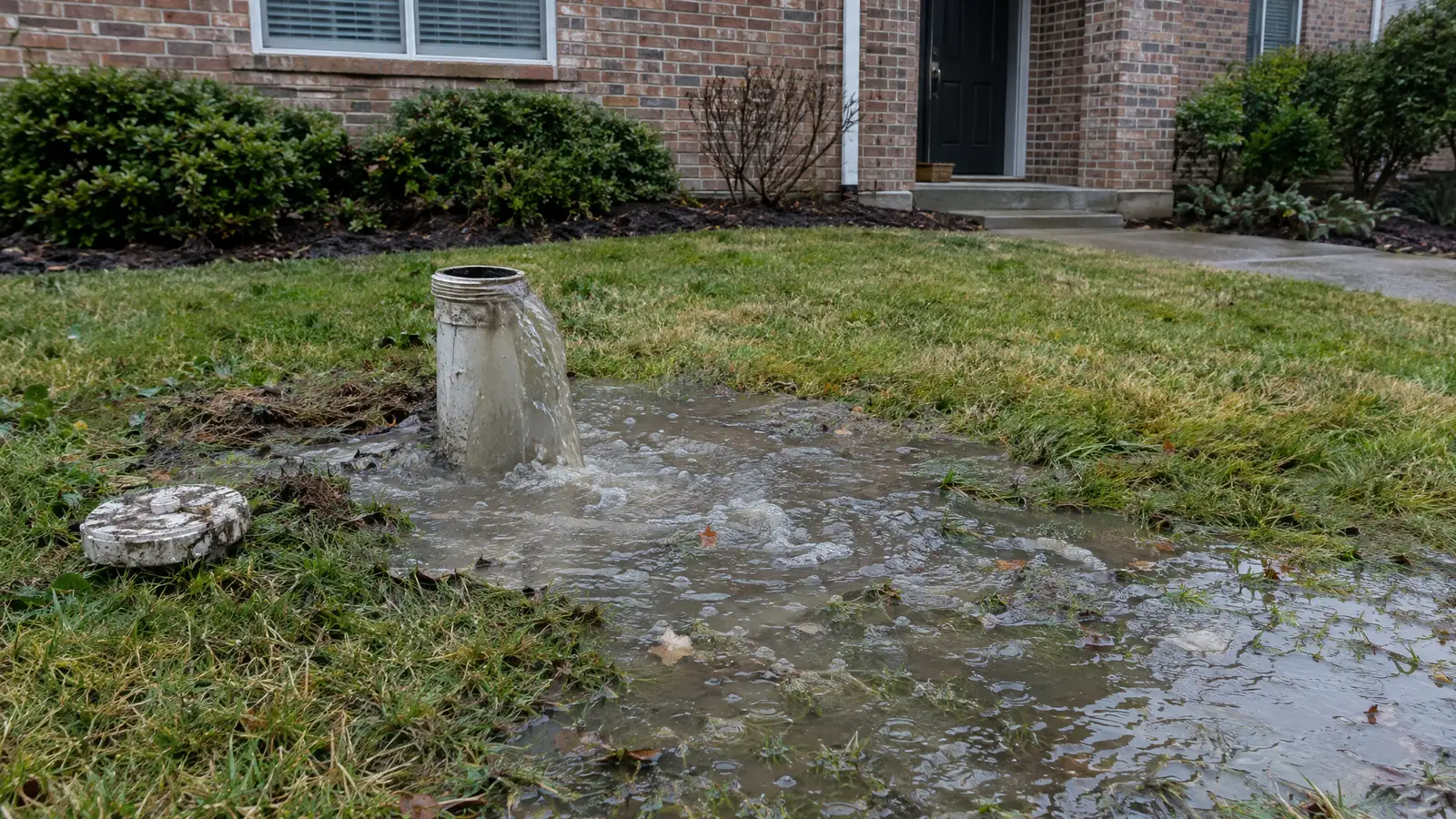
- Wet or sunken ground can mean sewage leaking
- Backups that keep returning after clearing are a warning
- A camera confirms and locates the break
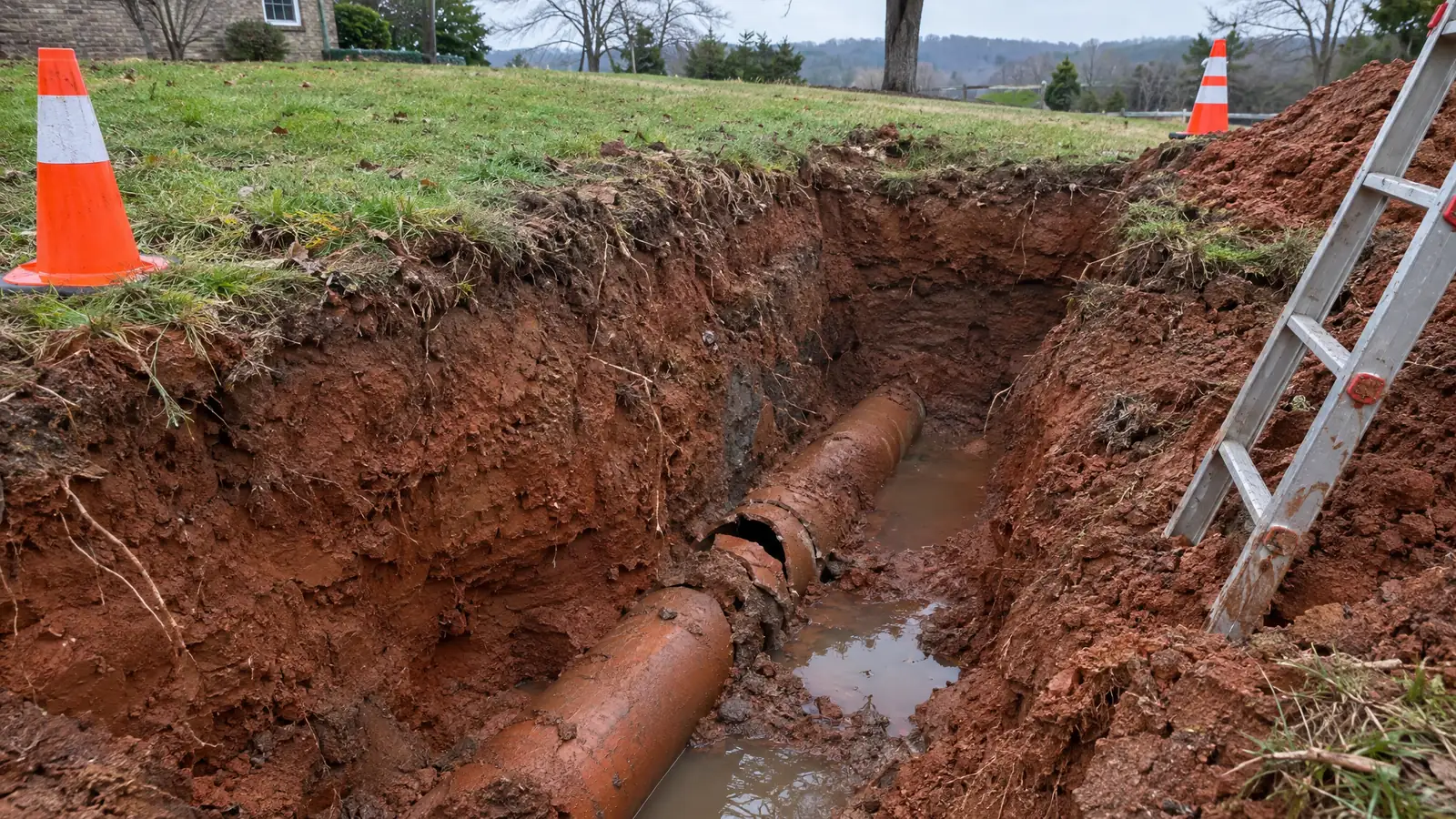
A break is not a clog
A clog is something inside the pipe. A break is damage to the pipe itself: a crack, a shifted joint or a collapse. Clearing the pipe may restore flow for a while, but the underlying damage remains.
The signs often look like repeat clogs.
What you may notice outside
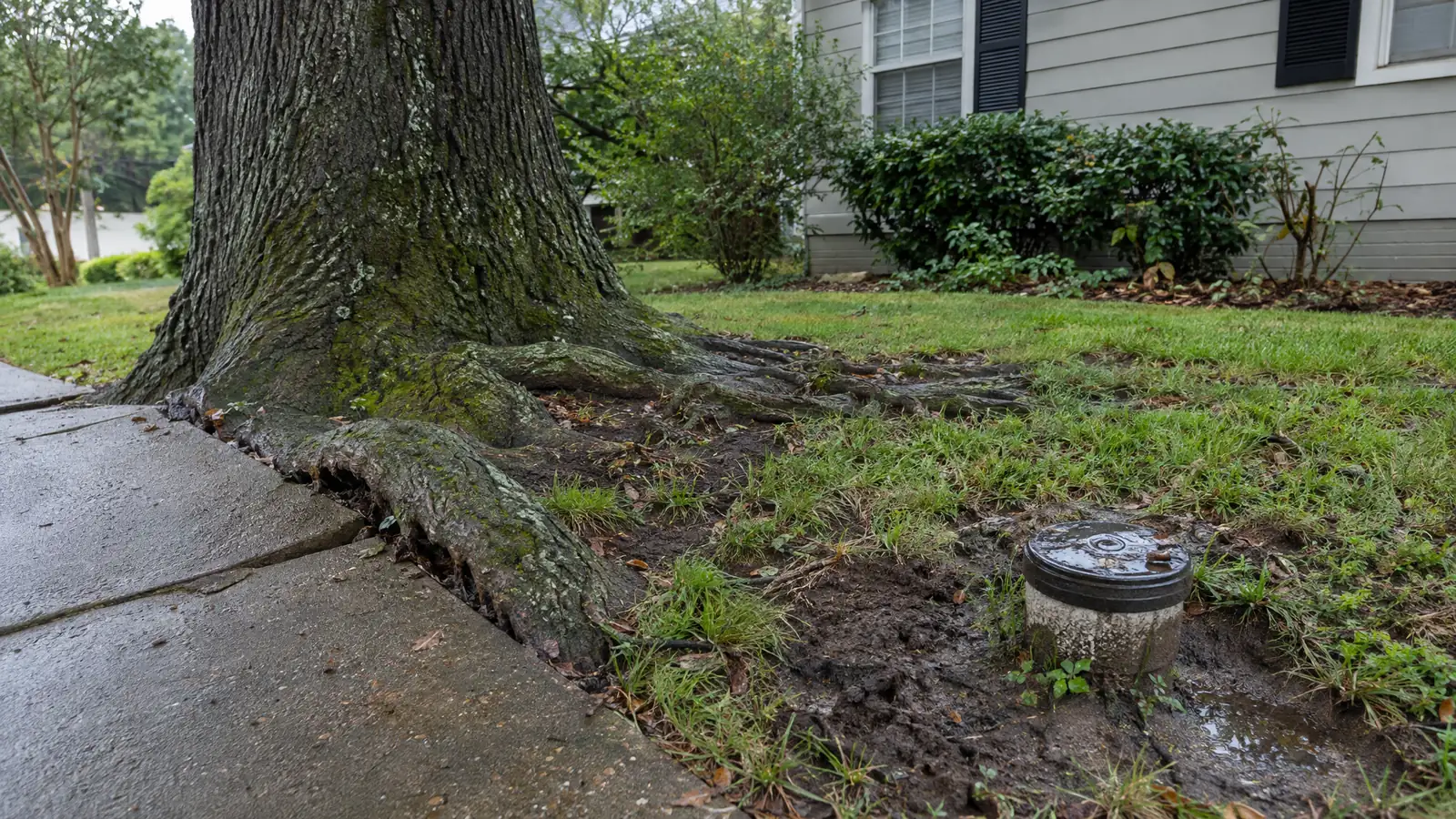
A patch of lawn that is greener, wetter or sunken than the rest. A sinkhole. A sewer smell outdoors. More rodents or insects. A change in water pressure is not usually a sewer symptom, but a water line leak can mimic it.
If you see these along the path of the sewer line, tell the plumber.
What you may notice inside
Repeat backups that clearing does not stop. Slow drains throughout the house. Gurgling. A camera view shows soil, roots or a crushed pipe.
In a collapsed line, a cable may stop at a certain distance every time.
What happens next
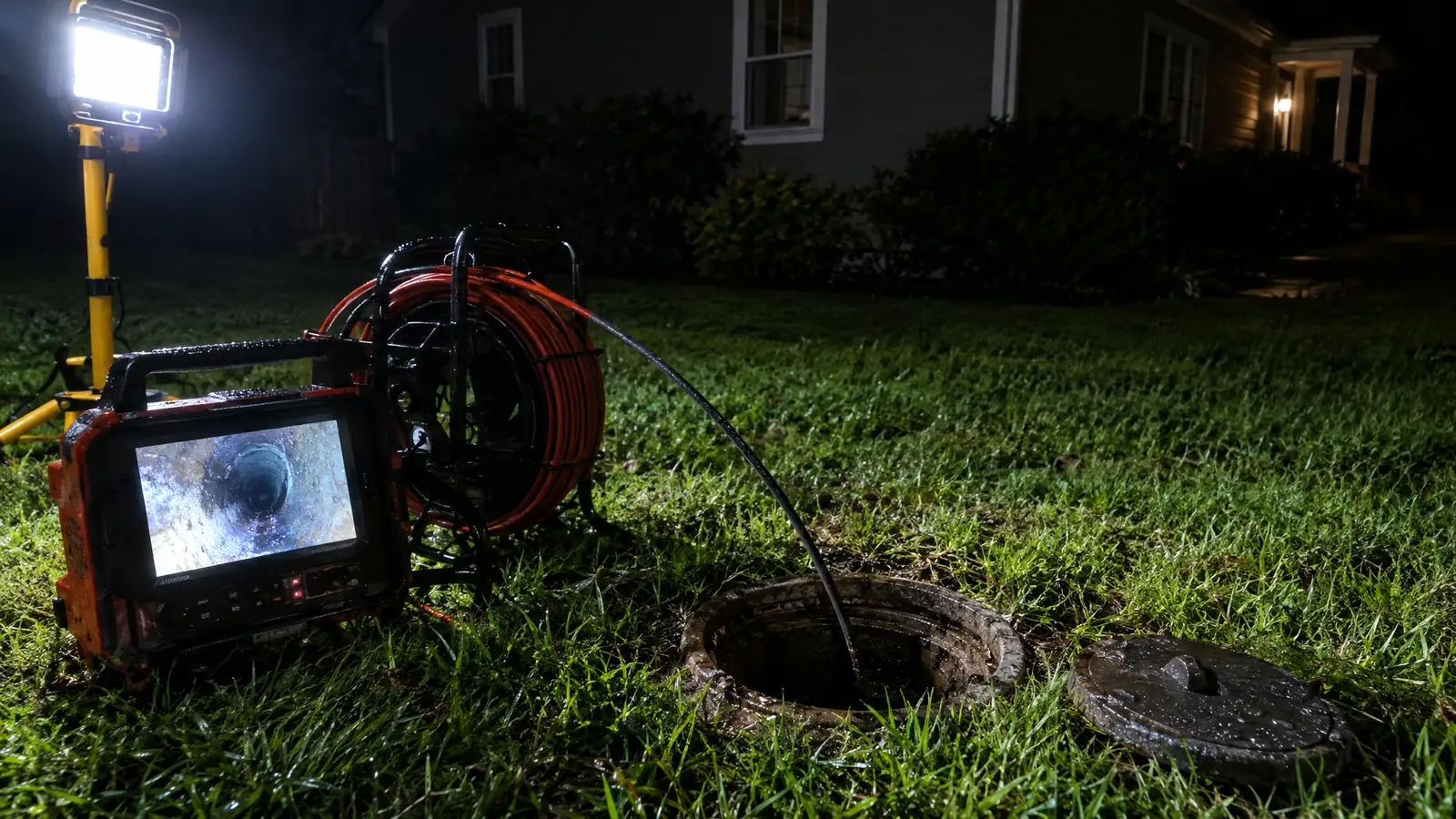
A camera locates the break and its depth. Repair options include a spot repair by excavation, a trenchless liner for some situations or replacement of a section. Which fits depends on the pipe and the damage.
Call 811 before any digging so that utilities can be marked.
Quick answers
How long can a broken line wait?
It is best not to wait: waste can undermine soil and a collapse can leave you without a working sewer.
Will I have to replace the whole line?
Not always. A camera shows how much is damaged.
Need help with this right now?
Call (615) 952-0844 any hour, or send the form below. If you smell gas, leave and call 911 and your gas utility first.