Key takeaways
- Shut off the cold supply on top of the heater
- Switch off the breaker (electric) or turn the gas control down (gas)
- A leak from the tank body means replacement
- A leak from a fitting or valve may be repairable
Shut it down
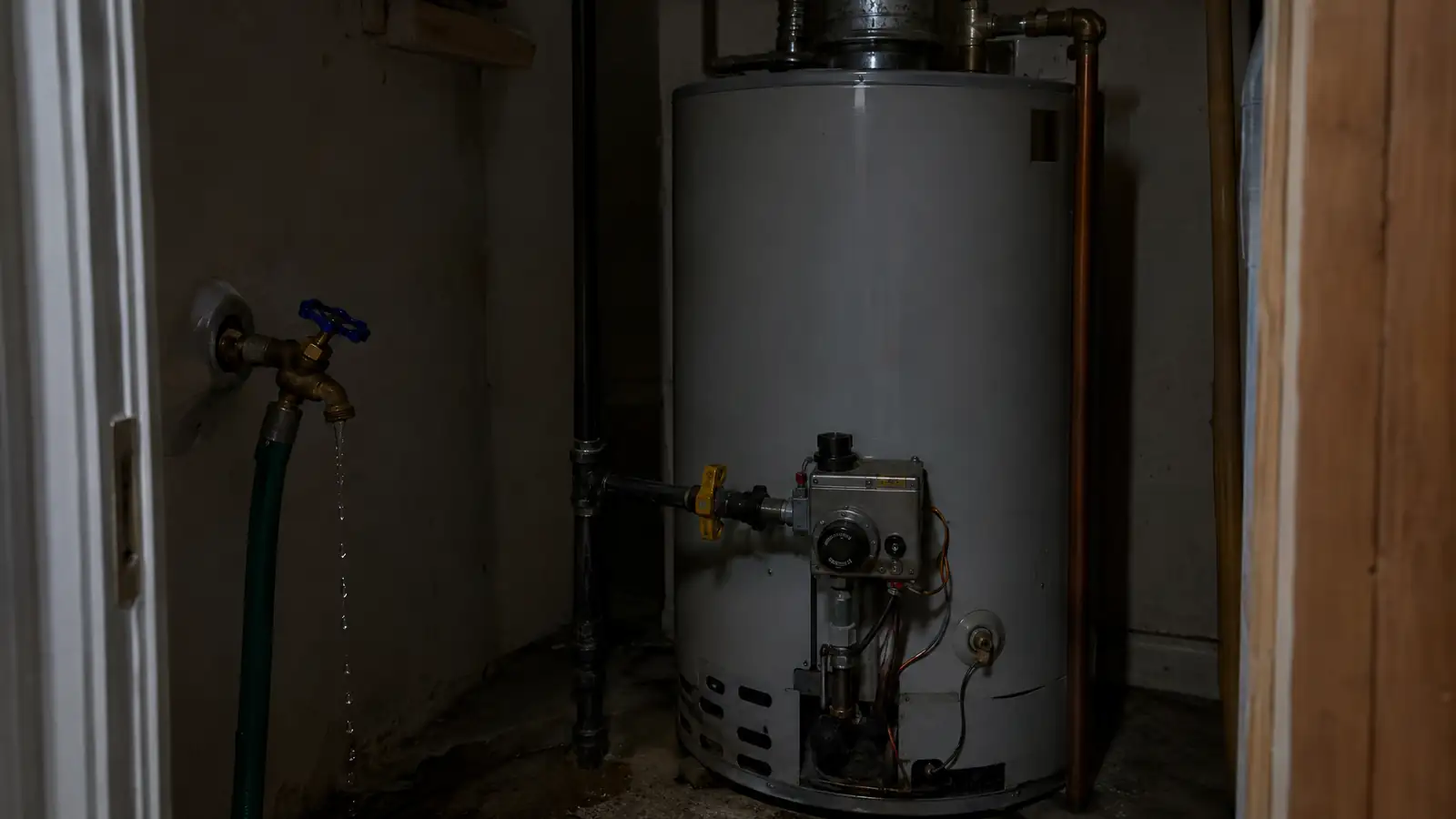
Close the cold water valve on top of the heater. For an electric heater, switch off its breaker. For a gas heater, turn the control to pilot or off.
Do not touch very hot water or pipes. Keep children and pets away.
Find the source
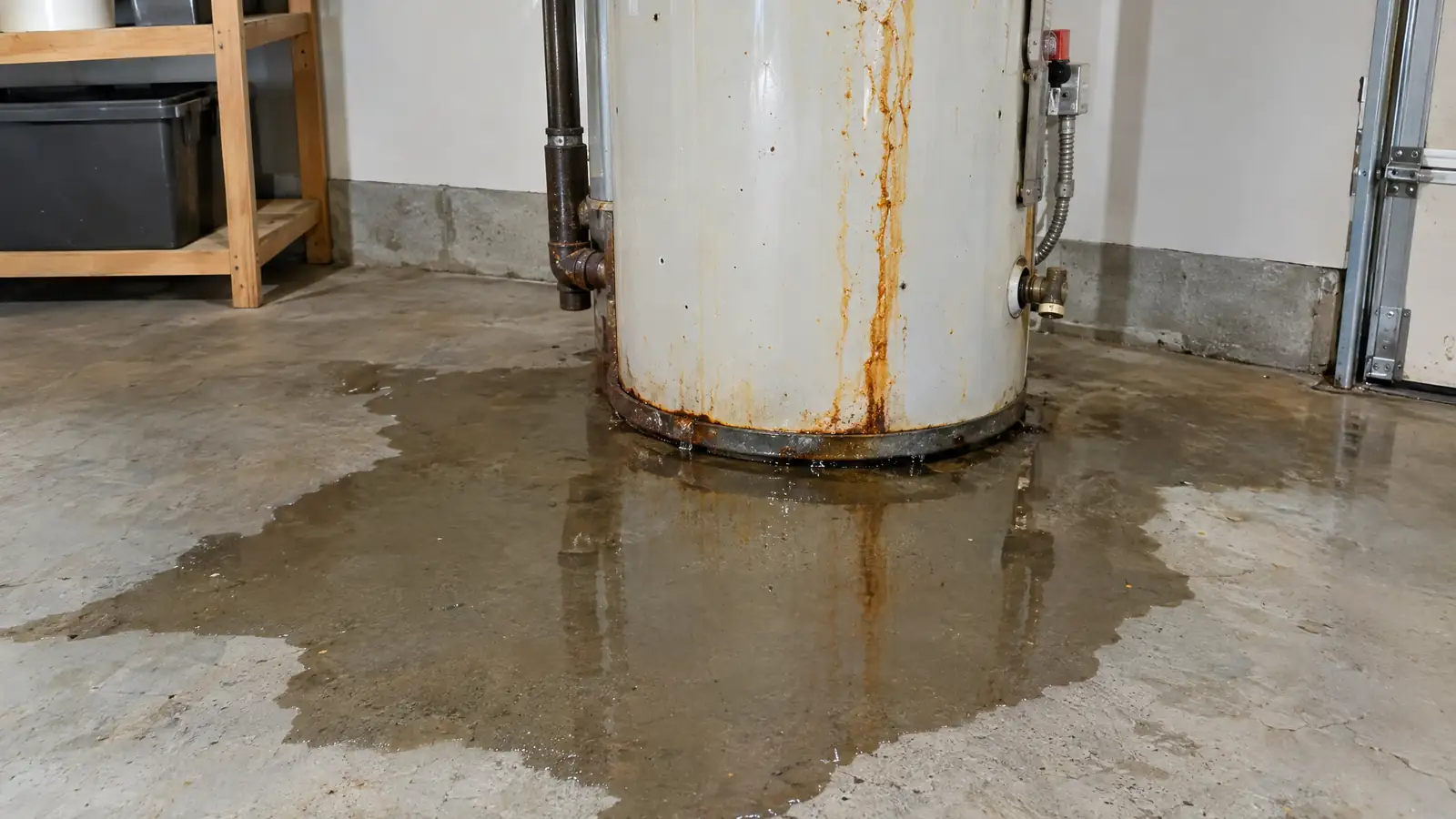
Check the fittings and valves on top, the relief valve and its drain pipe and the drain valve at the bottom. A drip at a fitting may be a simple repair. Water from the tank itself means the tank has failed.
A relief valve that drips regularly may mean pressure or temperature problems.
Repair or replace
A leaking tank body cannot be repaired. Heaters last roughly a decade or more depending on type and water quality, so an older heater that leaks is usually ready to be replaced.
A younger heater with a leaking fitting can often be repaired.
Protect the area
Move items away and mop up. A drain pan under the heater and a leak sensor can reduce damage next time.
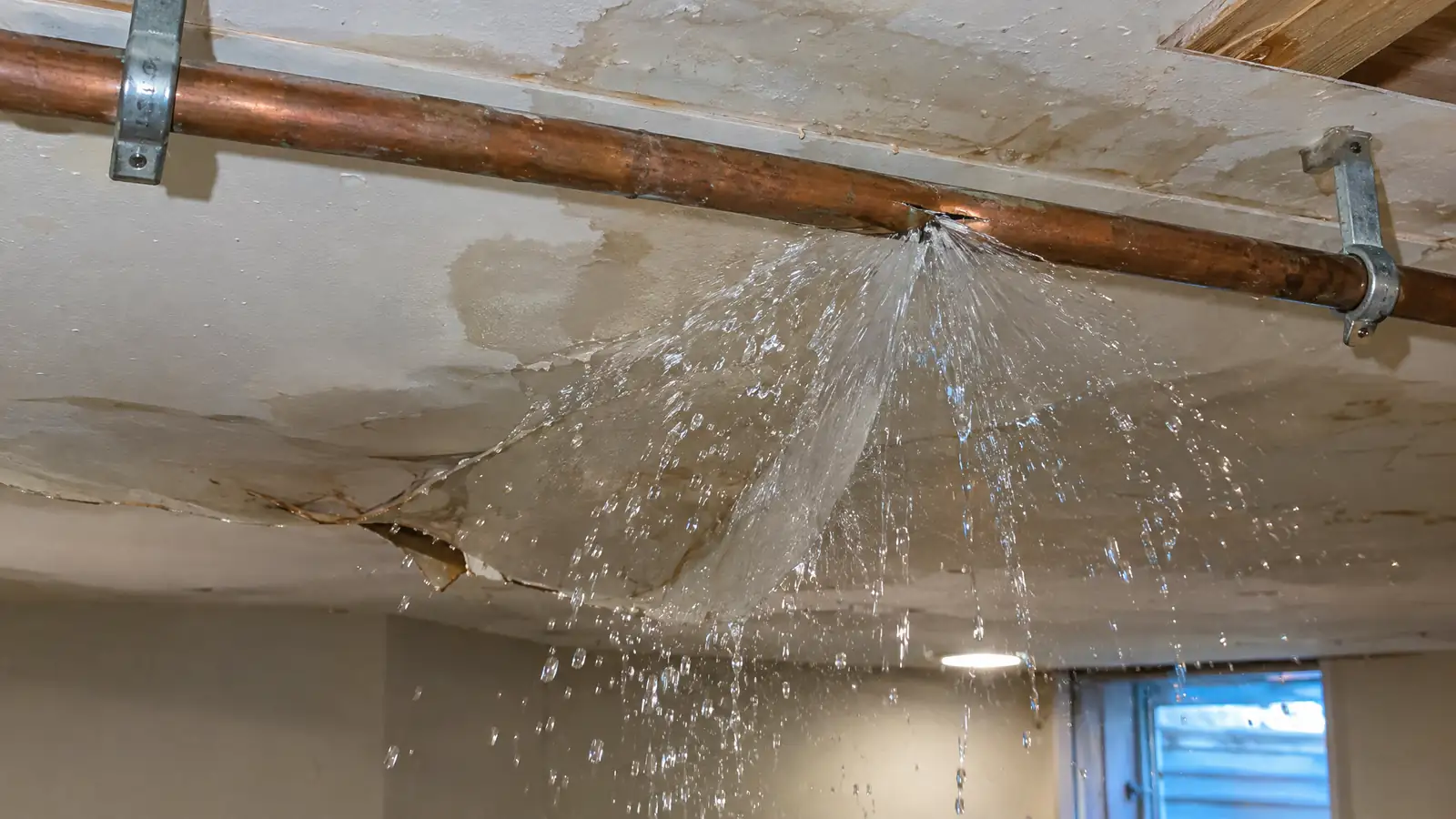
If the heater is in an attic or above a finished floor, act quickly, since the water can reach ceilings.
Quick answers
Can I run it until a plumber arrives?
No. Shut off the supply and power or gas.
How do I know the age?
The label on the tank has a serial number that contains the manufacture date. Tell the plumber the number.
Need help with this right now?
Call (615) 952-0844 any hour, or send the form below. If you smell gas, leave and call 911 and your gas utility first.